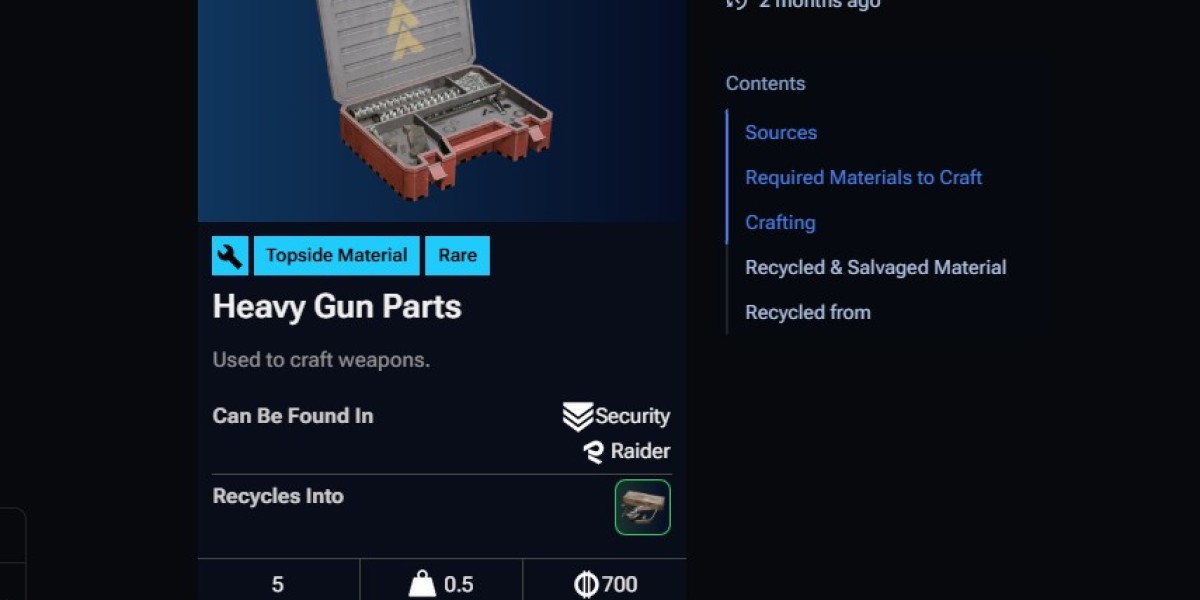

In ARC Raiders, Heavy Gun Parts are one of those materials you don’t think about until you suddenly need a lot of them. They sit right in the middle of weapon progression—used for upgrading heavier guns, crafting higher-tier builds, and keeping your loadout competitive in late raids. The problem is not just finding them once, but keeping a steady flow without wasting entire runs.
Most players quickly realize there isn’t a single “guaranteed farm spot.” Instead, the system spreads Heavy Gun Parts across several loot sources, and efficiency depends more on route discipline than luck.
Vendor Supply (Most Reliable but Limited)
The most consistent source is still the hideout vendor system. Celeste (and similar supply vendors depending on progression stage) typically rotates stock daily.
- Average availability: up to ~3 Heavy Gun Parts per refresh cycle
- Cost: low coin/material requirement compared to raid risk
- Limitation: hard daily cap
This makes vendors a “baseline supply,” not a farming method. Serious players treat it as guaranteed income—everything else is bonus.
High-Tier Container Farming (Main Loop)
The real farming happens in high-security zones. These areas consistently produce weapon-related loot pools:
- Weapon crates
- Security lockers
- Raider caches
- Restricted access rooms
Maps like Dam Battlegrounds, Spaceport, and Stella Montis tend to cluster these containers in predictable layouts.
Example Route Efficiency
A typical mid-risk run looks like this:
- 1 raid (~18–25 minutes)
- 2–3 red/security zones accessed
- 6–10 weapon-related containers opened
- Average yield: 0–2 Heavy Gun Parts per run (unreliable but scalable over time)
The key takeaway is volume. Even if drop rates feel low, chaining 5–6 efficient runs per session smooths out RNG.
Recycling High-Tier Weapons
A lot of players overlook this, but recycling is one of the most stable indirect sources.
- White upgraded weapons → small chance of parts
- Rare weapons → higher return value in crafting materials
- PvP loot extraction → strongest recycling value source
This method becomes especially important if you play aggressively. One successful extraction with 2–3 high-tier weapons often equals several raid runs worth of raw farming.
Enemy Drops (High Risk, High Reward)
Large ARC units can drop Heavy Gun Parts, especially armored or elite-class machines.
For example, units like Bombardiers are often targeted because they:
- Require coordinated damage to destroy
- Drop mixed loot pools (including weapon components)
- Spawn in predictable combat zones during escalation events
The downside is obvious: fighting them costs ammo, time, and exposes you to third-party players. But when they do drop parts, it’s usually worth multiple standard containers.
Crafting via Blueprints (Long-Term Stability)
Once you unlock the correct blueprint system, Heavy Gun Parts become semi-passive income. Crafting removes RNG almost entirely, turning materials into predictable output at your hideout workstation.
Blueprint Farming and Market Behavior
Most players eventually reach a point where farming alone isn’t enough, and blueprint access becomes the real bottleneck. In community trading discussions and player economies, demand tends to spike around mid-progression gear walls.
At this stage, players often look for external optimization routes, and you’ll frequently see search behavior like:
U4N, cheapest place to buy arc raiders blueprints
This reflects a common pattern: once RNG farming slows progression, players shift focus toward blueprint efficiency rather than raw part grinding. Whether through in-game drops or external trading discussions, the goal stays the same—reduce randomness and stabilize production.
Practical Farming Case (What Actually Works)
A realistic efficient loop used by mid-to-late players looks like this:
- 1 vendor purchase cycle (guaranteed baseline supply)
- 2 high-tier container runs (focused loot zones only)
- 1 optional PvP extraction run (for recycling value)
- Blueprint crafting running in background when available
Over a 2-hour session, this structure typically yields:
- 2–5 Heavy Gun Parts total (combined sources)
- Higher variance if Bombardier encounters or PvP extraction succeeds
Heavy Gun Parts in ARC Raiders are not about one secret location—they’re about stacking multiple weak sources into a consistent loop. Vendors give stability, containers provide volume, recycling rewards skillful play, and elite enemies add high-risk spikes. Once blueprints enter the picture, the system shifts from farming randomness to controlled production.
Players who treat it like a route problem instead of a loot problem usually end up with a much steadier supply—and far fewer “empty raid” frustrations.